
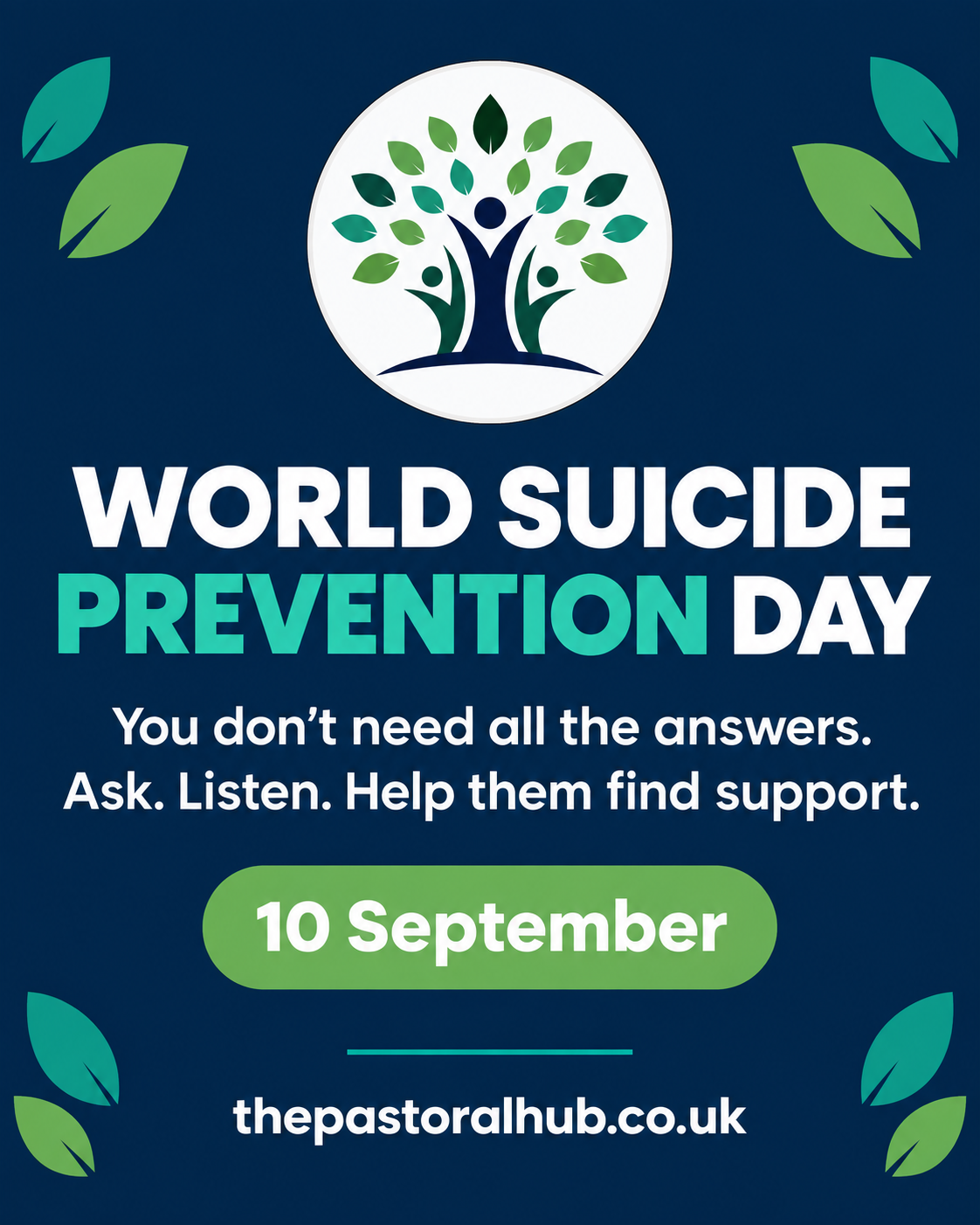
Starting a conversation
It is okay to use the word suicide
If someone seems overwhelmed, hopeless, withdrawn or unlike themselves, do not ignore your concern. You will not make things worse by asking directly and calmly whether they are thinking about suicide.
A simple approach
Ask, listen and help
Ask directly
If you are worried, ask calmly: “Are you thinking about suicide?” Asking directly does not put the idea into someone’s head. It can give them permission to speak honestly.
Listen without judgement
Give them time. You do not need to solve everything or find the perfect words. Take what they say seriously and avoid arguing, minimising or using guilt.
Help them find support
Ask what would help them feel safer right now. Involve an appropriate trusted adult or professional, and follow your organisation’s safeguarding procedures when they apply.
“I’ve noticed things seem really difficult at the moment. Are you thinking about suicide?”
Immediate and urgent help
Know what to do next
- If someone’s life is at risk, they have seriously injured themselves, taken an overdose or you cannot keep them safe: call 999 or go to A&E now. Stay with them if it is safe for you to do so.
- For urgent mental-health help in England: call NHS 111 and select the mental-health option, use NHS 111 online or ask for an urgent GP appointment.
- For confidential emotional support: call Samaritans free on 116 123.
- For confidential text support: text SHOUT to 85258.
After the conversation
Look after yourself too
Supporting someone through a difficult conversation can affect you. When the immediate situation is safe, pause and notice how you feel. Speak to someone you trust, seek professional support if you need it and allow yourself time to decompress.
Trusted information and further support
Reviewed 8 September 2026. This page offers general information and signposting. It is not a crisis service or a replacement for professional advice.